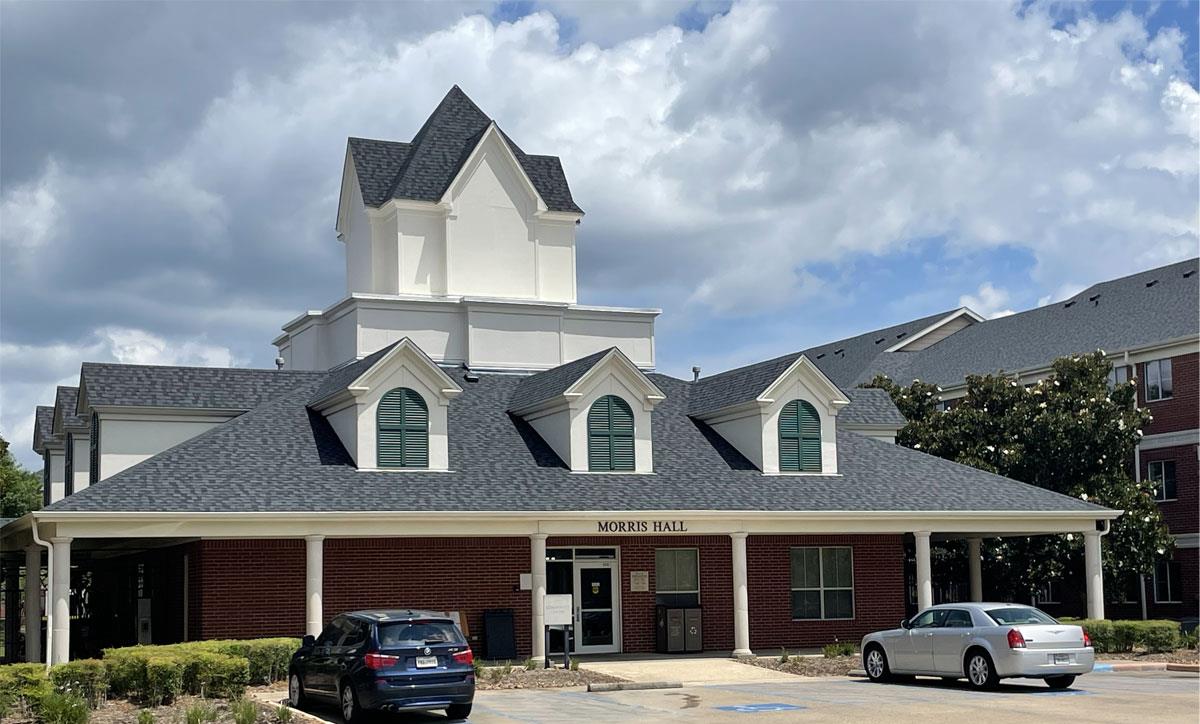
For many, college living falls into one of two categories: staying in dorms or commuting from off campus. The experiences tied to each lifestyle raise the question—how does where you live impact your college journey?
Understanding the differences between dorm life and commuting helps reveal how living situations affect academics, social life, and even finances. For some, the choice is shaped less by preference and more by practicality.
Sergio Mendez, a senior from Nederland, lives on campus thanks to a scholarship that covers his housing costs. He acknowledges that finances are a major factor in determining whether students stay in dorms or at home.
"I've been really blessed to have a scholarship with that," Mendez said. "But I do know it's pretty expensive to live on campus. So I think it just depends on every single person's financial situation—whether it's going to be beneficial for them or better to stay at home."
Beyond financial reasons, Mendez finds that dorm life offers academic and social advantages.
"It's really beneficial. It's been a huge help with studying late nights here and then just going to my dorms," Mendez said. "The biggest advantage is the involvement that you can be at. A lot of organizations sometimes meet late at night, late in the evening, so just being able to stay on campus and go to your room and then go to the event and, you know, go back—it's a lot easier."
On the other hand, freshman Clay Payton from Houston commutes to campus and lives at home. His family situation eases financial pressure.
"Yeah, I actually don't pay for a lot of things at home. I actually am, I guess, lucky that my parents don't make me pay a lot of extra stuff, so I don't have any other costs, like utilities or anything—I just live there," he said. "I do chip in because my dad uses my car. So I just give him money."
Still, Payton notes that being off-campus can limit opportunities to connect outside the classroom.
"I don't think me being here often affects how close I am because I've made a bunch of friends. Like college as a whole, I don't really know that many people, because I'm not at a lot of those extracurricular events, because, you know, I just live kind of far," he said. "But here, it doesn't really affect anything. I mean, I'm here most of the day anyways, just during classes."


Lamar University’s annual Cardinalpalooza took on a whole new energy this year with a guest appearance by rising rap artist That Mexican OT. The concert, held at the Montagne Center, drew a diverse crowd of students eager for a night of music and connection. Through the voices of students and organizers, it’s clear that events like this offer more than entertainment—they spark dialogue, inspire school spirit, and open up space for meaningful student engagement.
Ja’Kayla Simple, a junior majoring in social work with a minor in criminal justice, shared her perspective on the event. “That Mexican OT, yeah, I know a couple songs, yeah,” she said. “I know a little bit about him because he from Houston too.” Already a fan before the event, her experience at the concert only strengthened her appreciation. “The performance was great. Yeah, the crowd was little. He was there. He was awake. He was licked.”
When asked about her impression of OT after seeing him live, she added, “Yeah, he's great, very, you know, he pays very good attention to the crowd. Very thankful for our presence. Can't complain. Yeah, he has, he has pretty good, like, morality as well.”
Simple also shared her appreciation for the cultural blend that That Mexican OT brings to his music. “Yeah, I love everybody. I love my Mexicans, I love my white folks. I love everybody. So if you got some good music, I'ma listen. I never been one to not listen.”
The DJ set before the main performance set the mood. “Oh, yeah, the DJ set was nice,” she said. “You know, we could always do a little line dancing since we're standing room only, yeah? But other than that, was cool. I had great time.”
While Simple rated the overall concert experience a “seven out of ten,” she praised the organizers.
“The student government people doing great,” she said. When prompted further, she and her group chimed in with a shared message: “More engagement... We want a water day. Get the water slides. Get all that.”
Popularity and name recognition also played a role in what students wanted to see.
“Yes, we voted for Rob 49 or Boston Richie. That's who we wanted to see. But it's okay... we would like to see that happen next semester, in the fall, we promised to do a big turnout, even if we got to pay 25 again,” she said.
As for whether students would pay for bigger artists, her answer was clear: “If it's the artists we voted for? Of course, we don't mind paying. They got Kendrick Lamar. Here, you exactly.”
Safety, accessibility, and inclusion also came up.
“It's pretty good. Like this happening in the Montagne this good. It's safe. We got LAPD. We got the security so we don't have to worry about nothing crazy happening,” she said. She also added a final note on student inclusivity: “It's always cool to have it open to the students, but I feel like some students should be able to have a plus one. Every now and again, let's do a plus one. What if I want to bring my little friend?”
Adriana Houston, a freshman student representative on the Student Activities Board, helped explain how the event came to life. “We really had a list of different artists because we really wanted the students to pick who they want,” she said. “So we just created like a little survey on LU and we just promote it and be like, hey, vote for who you want.”
She emphasized that the entire process was designed with students in mind.
“We just want to do something fun, interactive, engaging for the students. That was our whole goal,” Houston said. “We just want everybody to have fun, stay safe, and just have something to remember.”

The topic of free speech continues to spark debate across college campuses, and Lamar University is no exception. With a diverse student body and a range of opinions, students at Lamar are actively discussing where the line should be drawn between free expression and respectful dialogue.
"I think everyone should be allowed to voice their opinion, but it shouldn't come at the expense of someone else's dignity," said Jasmine Ford, a senior majoring in political science. "We're adults. We can handle tough conversations, but we should also be held accountable for how we say things."
Others echoed similar sentiments, pointing out the university's role in fostering both freedom and civility.
"Lamar gives us spaces to speak out, but they also encourage respect," said Michael Jones, a sophomore communications major. "I've seen students debate intense topics, but there's usually a tone of understanding and not just shouting matches."
The Office of Student Engagement hosts events and panels regularly to ensure students feel empowered to participate in these conversations. According to Student Life coordinator Denise Campbell,
"It's our job to give students the platform, but also guide them in how to use it constructively."
The balance between freedom and responsibility remains delicate, but many students at Lamar believe it is worth protecting.
"It makes us think critically," Ford added. "And that’s what college is supposed to do."

College students often seek out the perfect place to study, and Lamar University offers several popular spots that cater to different preferences. From late-night study sessions in the library to grabbing a booth at the Setzer Student Center, students find creative ways to stay focused."
I personally love studying on the 7th floor of the library," said Aaron Lewis, a junior engineering major. "It’s quiet, and the view helps me de-stress. It’s my go-to when I need to power through an exam week."
Others prefer the energy and accessibility of campus common areas.
"I usually hit up Starbucks in the Set (Library)," said Destiny Nguyen, a freshman biology major. "It’s social, but still productive. Sometimes just being around other students who are working helps me stay motivated."
The university also supports academic success through dedicated quiet hours in dormitories and extended library hours during finals.
"We take feedback seriously," said Libby Hutchins, a staff member in the academic success office. "If students need a certain environment to do their best, we do what we can to provide that."
With finals approaching, more students will be claiming their favorite study spaces. And whether it’s a silent floor or a buzzing coffee shop, Lamar students know how to make the most of their study time.

Entrepreneurship is alive and well at Lamar University, where students are finding creative ways to balance academics and business ownership. From baking businesses to custom T-shirts and photography, the campus is buzzing with side hustles.
"I started my cookie business during quarantine and never stopped," said Brianna Lopez, a senior in marketing. "I take orders through Instagram and deliver them on campus. It’s been a great way to earn money and build my brand."
Other students have found success through digital content.
"I do graphic design commissions," said Tyler Brooks, a sophomore majoring in art. "I’ve worked with a few student organizations too. It helps me build my portfolio while getting paid."
The Center for Innovation and Commercialization at Lamar provides resources to help student entrepreneurs. Workshops, mentorship, and funding opportunities are available to those interested in turning their ideas into reality.
"Our goal is to support the next generation of business leaders," said program director Alicia Monroe. "Many students come here with talent and drive—we just help connect them to the tools. "For many students, running a business on campus is more than a side gig. "It’s made me more confident," Lopez said. "And it reminds me that we’re capable of more than just class assignments."